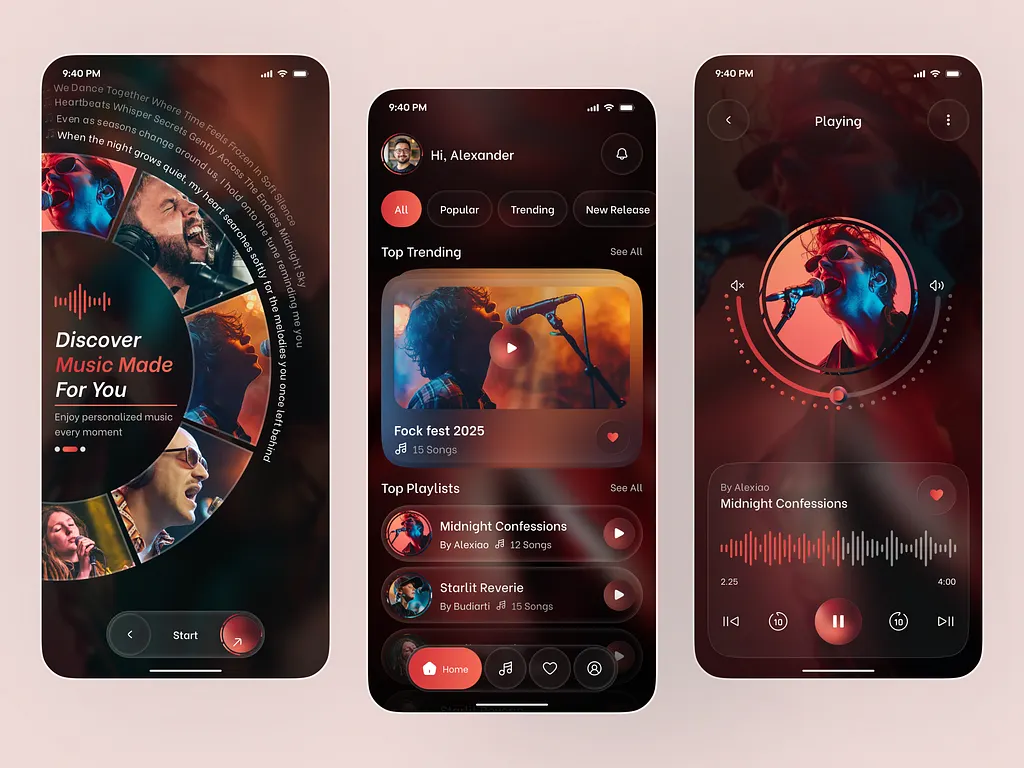

Music streaming has revolutionized discovered, listened, and shared audio content. Music streaming platforms such as Spotify, Apple Music, YouTube Music and SoundCloud have generated a rising demand to have customized, on demand listening experience. Due to this, start-ups, media organizations, artists, and entertainment firms are turning more and more towards the development of music streaming apps as a means of reaching a larger audience and developing new sources of income.
However, one of the most common questions businesses ask is: How much does music streaming app development cost?
The response varies based on various factors such as application features, operating system, complexity of the development, scaling, and streaming architecture. No matter what type of MVP you are developing, a podcast site, or an application resembling Spotify, being aware of possible expenses can guide you to create a better budget.
In this guide, we will deconstruct the music streaming app development cost, look at the factors that affect the pricing and how businesses can create cost-effective streaming applications.
- How Much Does Music Streaming App Development Cost?
- Key Factors That Affect Music Streaming App Development Cost
- Platform Choice
- UI/UX Design
- Backend Infrastructure
- Music Streaming App Development Cost by App Type
- Feature-Wise Cost Breakdown of a Music Streaming App
- Spotify Clone App Development Cost Breakdown
- Music Licensing and Royalty Costs
- Technology Stack and Infrastructure Costs
- MVP vs Full-Scale Music Streaming App Cost
- Hidden Costs of Music App Development
- How Startups Can Reduce Music App Development Costs
- Why Choose Bestech for Music Streaming App Development?
- Conclusion
- FAQs
How Much Does Music Streaming App Development Cost?
The price to develop a music streaming application can be vastly different depending on the complexity, features and business objectives of the app. The simplest form of music streaming MVP is much cheaper when compared to a full-fledged product that includes AI-driven recommendations, the ability to play podcasts, and live streaming.
| App Type | Estimated Cost |
| Basic Music App MVP | £15,000 – £30,000 |
| Mid-Level Streaming App | £30,000 – £60,000 |
| Advanced Spotify-Like App | £60,000 – £120,000+ |
The simplest MVP can consist of user registration, music streaming, search, and playlist creation. Online only applications can be augmented with offline listening and social sharing and subscription features. Premium streaming services may have an AI-based recommendation service, podcast services, singer dashboard, multi-gadget synchronisation, and enterprise scalability.
Due to the specificities of any project, the development cost of any two music streaming applications cannot be the same.
Key Factors That Affect Music Streaming App Development Cost
The final price to construct a music streaming application varies, based on the features of the application, the complexity, technology stack, and infrastructure. Knowledge of these factors will assist in budget planning of businesses.
App Complexity
One of the largest cost drivers is the complexity of your application.
A basic simile music streaming app can just consist of essential playback and playlist provisions. Further developed applications usually have:
- Personalized music recommendations
- Podcast streaming
- Live audio streaming
- Social sharing features
- Smart playlists
- Multi-device synchronization
The more features that it contains, the more you develop it and the better the cost is.
Platform Choice
Pricing also depends on your target platform.
Options include:
- iOS app development
- Android app development
- Cross-platform development
Cross-platforms like Flutter and React Native can also be used to ensure that the cost of development can be minimized by enabling a business to have one set of code to serve a wide variety of platforms.
UI/UX Design
Contemporary users desire enjoyable and intuitive interfaces.
Custom UI/UX design can entail:
- Interactive music players
- Personalized dashboards
- Playlist management screens
- Artist profiles
- Audio discovery sections
A sleek design will enhance the user retention but may raise start-up development cost.
Backend Infrastructure
The music streaming experience is supported using the backend.
Back-end development typically consists of:
- User account management
- Music library management
- Content storage
- Streaming servers
- Subscription handling
- Analytics systems
Applications that integrate a massive content base and high traffic demand extra sophisticated infrastructure.
Third-Party Integrations
Numerous music applications combine with third-party services including:
- Payment gateways
- Analytics platforms
- Push notification services
- Social media integrations
- Cloud storage services
The functionality of each of the integrations comes at a cost but can as well raise the development time and cost.
Music Streaming App Development Cost by App Type
The prices of music streaming applications development may be different since the type of platform you need to construct may differ. The application of various apps types need various features, technologies, and infrastructure that directly influence the entire budget.
On-Demand Music Streaming Apps
Examples include Spotify and Apple Music.
They are apps most often containing:
- Music search
- Personalized playlists
- Offline listening
- Subscription plans
- Recommendation engines
The cost of development is moderate to high, typically, because of the need to use content management and streaming infrastructure.
Podcast Streaming Apps
The podcast platforms specialize in distribution and subscription of audio-based content.
Key features include:
- Podcast libraries
- Episode management
- Audio playback
- Subscription features
- Download options
The development of podcast streaming applications can be cheaper compared to large-scale music streaming outlets since the licensing can be less complicated.
Live Music Streaming Apps
Live streaming engines facilitate live streaming and interaction with the audience.
Features may include:
- Live concerts
- Real-time audio streaming
- Chat functionality
- Audience interactions
- Event management
Because of their real-time capabilities, live music streaming app development costs are usually higher.
Audio Streaming Apps
The audio streaming applications can be orientated towards:
- Audiobooks
- Educational content
- Radio stations
- Audio courses
Cost of development is based on the volume of content and streaming needs.
Feature-Wise Cost Breakdown of a Music Streaming App
The resulting cost of the music streaming app development services directly depends on the features used. Simple functionality will cost less to develop and sophisticated features, like AI suggestions and live streaming, can test the budget significantly.
User Features
Important user facing functions are:
- User Registration & Login
- Profile Management
- Music Search
- Playlist Creation
- Favorites & Likes
- Offline Downloads
- Music Recommendations
- Push Notifications
Artist Features
Artists-oriented functionality can comprise:
- Music Upload
- Content Management
- Revenue Tracking
- Listener Analytics
Admin Features
The management of the platform is facilitated by administrative tools.
Popular administrative types are:
- User Management
- Content Moderation
- Subscription Management
- Analytics Dashboard
| Feature | Complexity |
| User Login | Low |
| Search & Filters | Medium |
| Playlist Management | Medium |
| Offline Listening | High |
| AI Recommendations | High |
| Live Streaming | High |
Complexities demand additional resources to develop and enhance the cost of the project.
Spotify Clone App Development Cost Breakdown
The price of the Spotify clone application will be based on the features and complexity of the platform and scalability. An app with a bare bones layout, and essential streaming content, will be cheaper than a more sophisticated application that incorporates AI-generated listings, podcasts, and cross-platform syncing.
Core Spotify Features
Basic Spotify-like includes:
- Music library access
- Personalized playlists
- Offline listening
- Music search
- Social sharing
Advanced Spotify Features
More advanced functions can consist of:
- AI-powered recommendations
- Smart playlist generation
- Podcast integration
- Cross-device synchronization
- Real-time analytics
Cost Factors
The price to develop a music application such as Spotify will be based on:
- Streaming infrastructure
- Music licensing requirements
- Recommendation engine development
- Scalability requirements
- Cloud hosting resources
An MVP could be as simple as Spotify and be much less expensive than a platform needed to sustain millions of active users.
Music Licensing and Royalty Costs
Music streaming relying on music licenses is a critical aspect in the development of music streaming apps. In case you have a platform, which broadcasts copyrighted music, you are to have license and permission to distribute the content in accordance with the law. Such licensing necessities may be quite severe in terms of overall development and operational expenses of a music streaming application.
Some of the important licensing issues are:
- Music Rights Ownership: Determining the rights owner of the music that is being streamed.
- Royalty Payments: Artist, publisher or rights owner payments are made on the use of music.
- Licensing Agreements: Investigating legal rights to carry out and provide music contents.
- Content Distribution Rights: This is to ensure that your music can be streamed on your target regions and markets.
Business dealings that involve individual musicians might incur less cost in licensing than what would be incurred in negotiating with a large record company. The budget in which the project will be run may be greatly influenced by the cost of licensing and licensing ought to be put into consideration at the initial stages of planning.
Technology Stack and Infrastructure Costs
Technology stack your choice is a factor that relates to overall music streaming app development cost. The right technologies are helpful to ensure seamless operation, scalability, safety and enhanced user experience.
Frontend Technologies
Examples of popular frontend technologies are:
- Flutter
- React Native
- Swift
- Kotlin
Backend Technologies
The most common backends are:
- Node.js
- Python
- .NET
Databases
Frequently in use in music apps:
- PostgreSQL
- MongoDB
Cloud Infrastructure
Examples of popular cloud vendors are:
- AWS
- Microsoft Azure
- Google Cloud
Additional infrastructure costs may include:
- Content Delivery Networks (CDNs)
- Cloud storage
- Streaming servers
- Security solutions
- Backup systems
Scalable infrastructure is useful in providing seamless playback when there is an increase in the user numbers.
MVP vs Full-Scale Music Streaming App Cost
Numerous companies and startups prefer to roll out Minimum Viable Product (MVP) first and then invest in a large-scale music streaming concept. This would assist in the minimization of the initial development spending and to test the app concept in the hands of actual users.
MVP Features
MVPs are typically furnished with:
- User registration
- Music streaming
- Search functionality
- Playlist creation
Full Product Features
An adult platform could consist of:
- AI recommendations
- Podcast support
- Offline downloads
- Artist dashboards
- Social networking features
Benefits of Starting with an MVP
Developing an MVP has a number of benefits:
- Lower upfront investment
- Faster time-to-market
- Less complicated validation of business ideas.
- Reduced development risks
- Better feature prioritization
In the case of startups, an MVP may be a relatively inexpensive solution to launch the platform and test its demand in the market.
Hidden Costs of Music App Development
In estimating the cost of music app development, there are those businesses that tend to focus on the cost of the initial development and ignore the cost of the contradictory expenses. Nonetheless, these fixed expenses are fundamental to keeping performance, safety, and smooth user experience.
Some of the typical hidden costs are:
- Hosting: Needed to save music files and performance of the apps.
- CDN Charges: A Content Delivery Network helps to deliver audio to users in different locations at a much faster speed.
- App Maintenance: Periodical regular updates, bug fixes and improvements should be done to ensure the app runs smoothly.
- User data and payment: can be secured and monitored regularly for security.
- Third Party API Fees: There might be recurring fees for services such as analytics, money gate and notification trends.
- Licensing Fees If the music is copyrighted, you may be required to pay licensing fees and royalties to stream the music.
- Marketing & User Acquisition: Bringing your app to the market and getting new users can be really expensive.
- Customer Care: It demands specific resources to be offered through the provision of technical support and solving user problems.
The following costs should be included in your long-term budget to prevent any suprising costs and provide sustainable development of your music streaming platform.
How Startups Can Reduce Music App Development Costs
A startup that wants to build a music streaming application can find it expensive yet a strategic plan can ensure that the startup does not go overboard on the costs incurred but the application is successful upon release.
The following are some of the effective means of saving costs of music apps development:
- Begin with an MVP: Start with basic requirements like user registration, music streaming, search and playlist creation.
- Concentrate on Essential Features: Need to get the must-have functionality first and introduce sophisticated features subsequently.
- Applying Cross-Platform Development: Frameworks such as Flutter and react native also save time and cost of developing the applications.
- Select Scalable Cloud Infrastructure: Only pay the resources you use and expand along with your user base.
- Add Functionality in Stages: Roll out AI recommendations, live streaming and social functions one at a time.
- Use an Experienced Development Partner(s): a competent team may prevent expensive errors and will accelerate development.
By emphasizing on the essential functionality and progressing in a gradual manner, the cost of development can be lessened, and the music streaming app employed by the start-up can be released sooner and new functionality becomes possible as their business expands.
Why Choose Bestech for Music Streaming App Development?
Selecting an apt development partner may make a huge difference between the success of your music streaming platform. Planning and design through to the development and deployment process, having an experienced working group would minimize risks, cost and time-to-market.
Bestech focuses on the development of scalable and rich music streaming applications, specific to the requirements of startups, media organizations, artists and entertainment firms. Our group puts emphasis on the development of user-friendly streaming services that help to grow a business and provide long-term success.
Reasons why businesses should go with Bestech:
- Skill in the development of music streaming applications.
- Comprehensive development of design to production.
- IOS/Android cross-platform solutions.
- Possibilities to develop podcasts and live music streams apps.
- Recommendation and personalization via AI.
- Scalable cloud-based infrastructure to expand user base.
- Clear development process, cost-saving solutions.
- Constant maintenance, updating and technical assistance.
Be it in creating a simple MVP, a podcasting site, a Spotify like streaming app, BestechSols offers customized and balanced solutions of performance, scalability and affordability and assists you in taking your music application idea to market quicker.
Conclusion
The music streaming app development cost will be determined by various factors such as features, complexity of the app, and the platform choice, infrastructure needs, and licensing costs.
In the market, the basic MVP can cost between 15-30 thousand pounds and advanced applications similar to Spotify can cost over 120 thousand pounds. Companies that put great consideration into feature sets, begin with an MVP, and select appropriate technology stack will have an easier time containing costs and developing a scalable platform.
With the ever-increasing demand of music streaming, podcastings, and audio content, the possibility of acquiring new opportunities in the field of audience engagement and monetizing it and ensuring business development in the long term at the cost of investing in a properly designed music streaming application can be created.
FAQs
The cost in the development of music streaming apps can range between 15,000 to 120,000 or more, depending on the complexity of the app, functionalities, platforms, and infrastructure demands. An MVP will be cheaper and a more advanced spotify-like implementation will be pricier.
It will be significantly influenced by various factors, such as the app complexity, features, platform choice, design of the interface/UX, the back-end infrastructure, third party integrations and music licensing needs.
The estimation of developing any music app such as Spotify can cost between 60-120,000 +, depending on the features incorporated. AI-driven recommendations, offline listening, podcasts and multi-device synchronisation features can add to the cost of development.
Basic music streaming a minimum music streaming app MVP typically comprises user registration, music streaming, search option, playlist creation and simple profile management. These aspects assist companies to justify the concept to them at the pre-development stage prior to investing in a complex functionality.
Yes, cross platform development is economical to most of the businesses. Flutter and React Native are technologies that enable developers to create both iOS and Android applications using one and the same codebase, saving them time and money.
Licensing music is critical as it grants business people a right to play copyrighted music. Any licensing deals and royalty fees can be a necessary requirement and can affect the general budget of the project.
Besides the development expenses, the businesses ought to look at the recurrent costs like hosting of servers, CDN, applications, updates on security, third party API subscriptions, licensing costs of music, marketing efforts, and customer services.
The development schedule will rely on the level and extent of the project. Only a few months could be needed to create the simplest MVP, and six months or more could be needed to create the complete music streaming platform.
Cost reduction techniques include starting with an MVP, paying attention to essentials, cross-platform development, a feature at a time, and scalable cloud infrastructure that can be expanded as the startup grows.
Bestech assists the businesses to create scalable and rich feature music streaming applications that appear to their purpose. The team provides tailored solutions to meet performance, user experience, and a cost-effective solution, whether it is MVP development or advanced streams platforms.