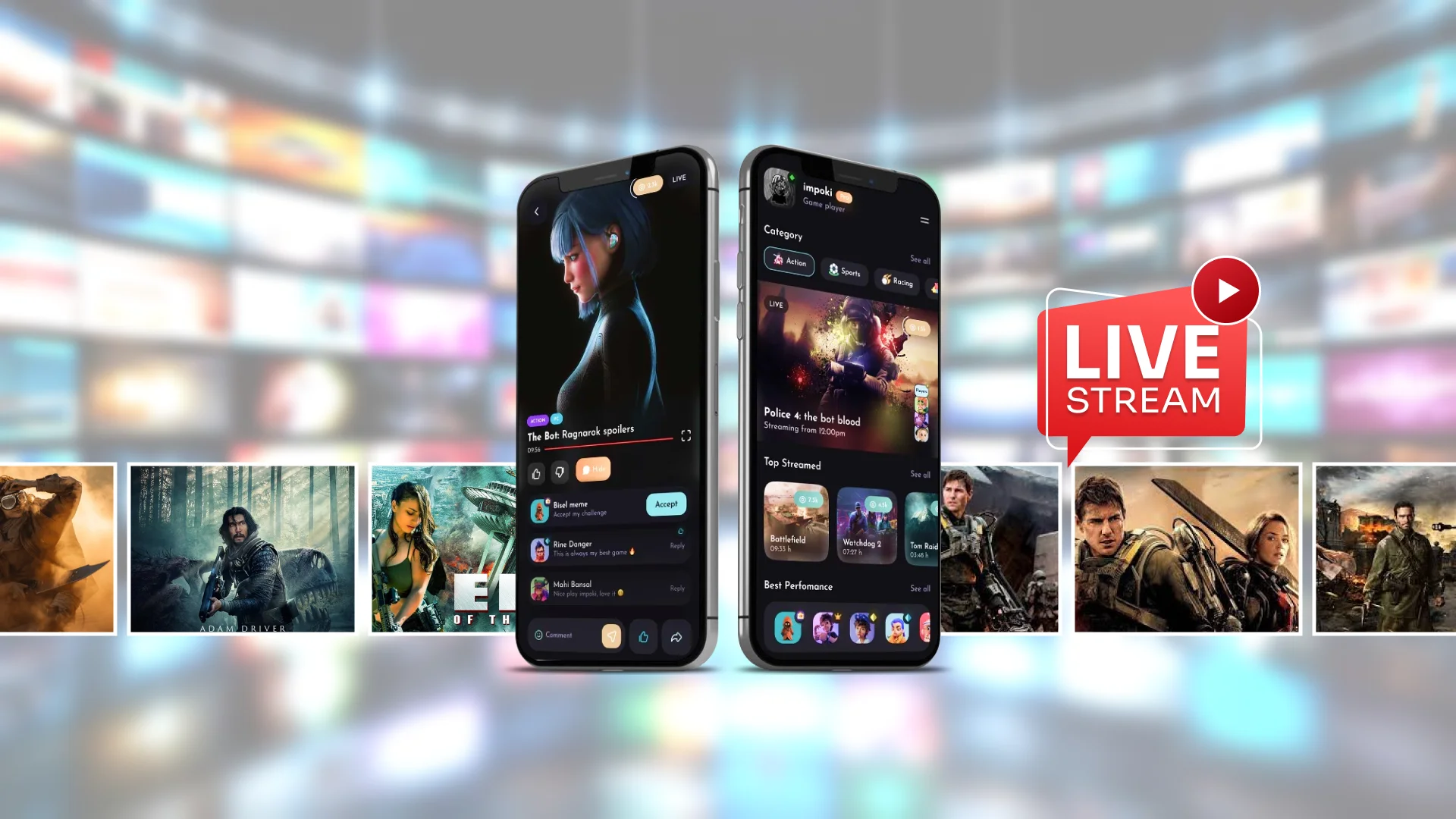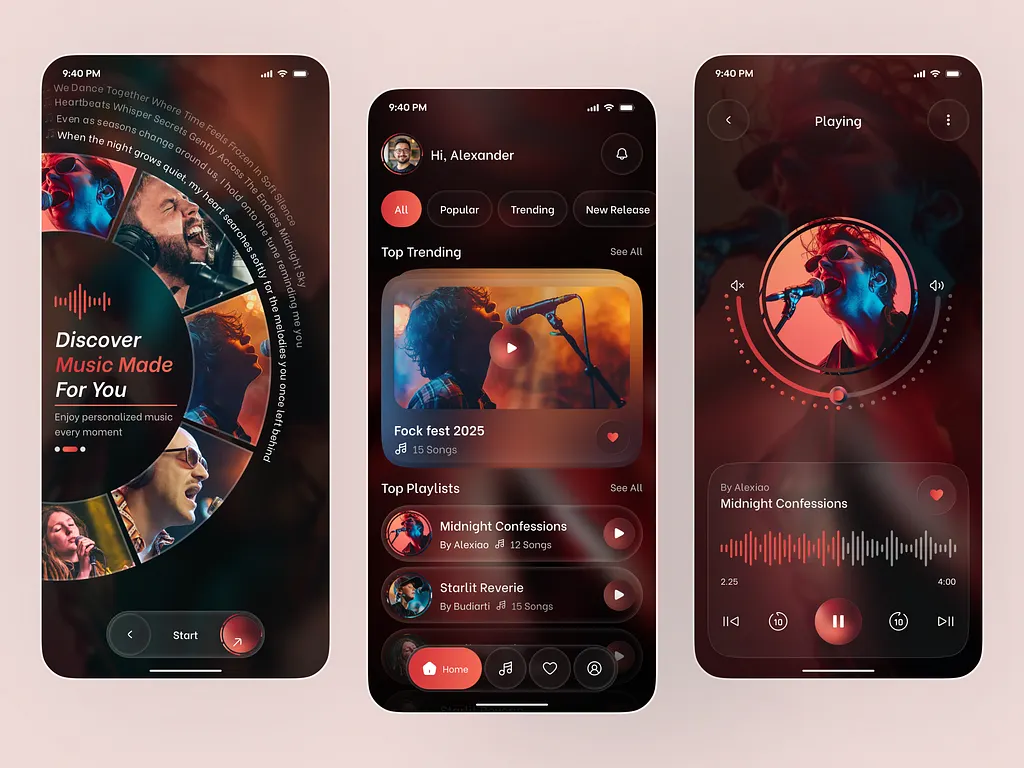

Online video content is increasingly being demanded by the consumers as the use of smartphones, smart TVs, tablets, and connected devices continues to grow with the consumers viewing video content as the required means of entertainment, education, sports, fitness and business. This is forcing the businesses to invest in digital streaming solutions to access more audiences and generate new sources of revenue.
OTT app development and video streaming app development are two terms that are interchangeably used. Although the two are related to video content delivered online, they address various needs, enable various business models, and provide a distinct experience to users.
It is necessary to comprehend the distinction between OTT solutions and video streaming applications to invest in the development of such tools. You might either want to launch a subscription-based content platform, a live streaming platform, or a Video-on-Demand (VOD) solution; either way, selecting the appropriate approach may enable you to meet your objectives of running the business more efficiently.
We, in this guide, compare between OTT app development and video streaming app development, discuss their features, applications, costs and monetisation opportunities and assist you as to which solution is best suited to your business.
- What Is OTT App Development?
- What Is Video Streaming App Development?
- OTT App Development vs Video Streaming App Development: Key Differences
- OTT Platform Development Use Cases
- Video Streaming App Development Use Cases
- Technology Stack Behind OTT and Video Streaming Platforms
- OTT App Development Cost vs Video Streaming App Development Cost
- How to Choose Between OTT App Development and Video Streaming App Development
- Why Choose Bestech for Custom OTT and Video Streaming Platform Development?
- Conclusion
- FAQs
What Is OTT App Development?
The popularity of on-demand content has triggered the rising demand of OTT platforms in the entertainment, education, sports and media industries. These platforms assist companies to deliver content directly to users and generate new audience growth and monetisation opportunities.
Understanding OTT Platforms
OTT is shorted as Over-The-Top, a process to provide video content without using the services of traditional cable or satellite TV providers using the internet. OTT platforms can be used to enable users to view content where and when they want to, through devices that can connect to the internet.
Delivering movies, TV shows, documentaries, educational videos, sports content, and other types of content on demand, popular OTT services have significantly changed the way people consume content.
Organisations in all businesses are currently spending on the development of an OTT platform to develop branded streaming platforms which can fully control content delivery, user interaction and monetisation.
Key Features of OTT App Development
A current-day OTT platform has a multitude of functionalities that are aimed at establishing a smooth watching experience.
Common features include:
- Registration of users and their profile.
- Membership and subscription management.
- Video-on-Demand (VOD) libraries allowing extensive video-on-demand.
- Multi-device streaming support
- Interoperability with smart technology devices and TV.
- Personalisation and content recommendations.
- Offline viewing functionality
- High level search and content classification.
- Incorporation of secure payment gateway.
- Audience insights and analytics.
These features allow companies to build a complete streaming ecosystem rather than just deliver video content.
Common OTT Business Models
Flexibility in the monetisation is one of the largest benefits of OTT app development.
- SVOD (Subscription Video on Demand): SVOD involves users paying a subscription every month or year to view content libraries.
- AVOD (Advertising Video on Demand): Advertisement is taken on the basis of advertising it before, during, or after content to generate revenue.
- TVOD (Transactional Video on Demand): Customers pay for a specific item of content, whether it is a movie, event or premium programme.
- Hybrid Models: It is common to have several platforms that offer subscriptions, advertisements and pay-per-view content to maximise the revenue potential.
What Is Video Streaming App Development?
Video streaming applications have turned into a crucial resource that businesses that need to offer video content to their customers can use. Fitness classes and corporate webinars, live events, and online learning are only a few examples of how users can easily access content anytime and anywhere with these applications.
Understanding Video Streaming Applications
The video streaming app development is a development of applications which enable users to view real time or recorded videos online. The apps are created to provide quality viewing experiences on mobile devices, over the internet, and on smart televisions and other devices which are connected to the internet.
In contrast to OTT platforms which usually concern management of extensive content and subscription services, video streaming apps are commonly designed to accommodate live streams, real-time communications, and on-demand video services. These applications are used in business to entertain, educate, play sports, benefit, healthcare, webinars, and corporate communication.
Key Features of Video Streaming Apps
Video streaming applications usually contain features, aimed at providing smooth and interactive experiences of watching.
Common features include:
- Live streaming capabilities
- Real-time audience interaction
- Chat and commenting features.
- Push notifications
- Video recording/playback.
- Event broadcasting tools
- Screen sharing functionality
- Audience engagement features
- Social media integration
- Performance analytics
These elements render streaming applications suitable in businesses that utilize real-time content and involvement of the audience.
Types of Video Streaming Apps
- Live Streaming Applications: used in the broadcasting of events, concerts, webinars, sports games as well as meetings.
- Video-on-Demand Apps: This will enable users to access pre-recorded content anytime.
- Educational Streaming Solutions: Application in School, Universities, trainers and e-learning solution providers.
- Sports Streaming Apps: Live matches, highlights and exclusive content in sports activities.
- Fitness and Wellness Apps: offer real-time fitness programs, coaching, and wellness.
- Corporate Streaming Solutions: Sustain internal communications, training of employees and virtual meetings.
OTT App Development vs Video Streaming App Development: Key Differences
Whereas both OTT platforms and video streaming applications provide video content via the internet, the applications are geared towards a business objective and user experience.
Purpose and Content Delivery
| OTT App Development | Video Streaming App Development |
| Focuses on complete content platforms | Focuses on video content delivery |
| Includes large content libraries | Often focuses on individual streams or events |
| Supports subscription-based models | Supports live and recorded streaming |
| Offers multi-device viewing experiences | Prioritises content accessibility and engagement |
OTT platforms are constructed with the aim of creating complete content ecosystems whereas streaming apps are oriented on the provision of video content in an efficient manner.
User Experience
OTTs also provide experiences close to the likes of major streaming platforms like accessing content libraries, platform recommendations, and viewing content on multiple devices.
Video streaming applications normally emphasize real time access to content, live engagement and participation by the audience.
Monetisation Opportunities
OTT Platforms
Some of the common revenue models are:
- Monthly subscriptions
- Premium memberships
- Pay-per-view content
- Advertising revenue
- Hybrid monetisation strategies
Video Streaming Apps
Some of the popular monetisation mechanisms are:
- Event ticket sales
- Sponsorship opportunities
- Donations and tipping
- In-stream advertisements
- Premium content access
Content Management
OTT platforms are typically highly powered content management systems which facilitate content scheduling, recommendations, categorisation and analytics.
Streaming applications usually specialize in running of broadcasts, video upload, audience engagement process, and event plans.
Device Compatibility
OTT platforms usually are made to operate on:
- Smartphones
- Tablets
- Web browsers
- Smart TVs
- Streaming devices
Commonly supported in video streaming applications include:
- Mobile apps
- Web platforms
- Desktop viewing
- Chosen smart device integrations.
OTT Platform Development Use Cases
Businesses in various industries utilize OTT platforms to provide the on-demand content, establish the community of subscribers, and generate new revenue sources by means of distributing the digital content.
- Entertainment Platforms: OTT solutions are extensively employed by entertainment firms in order to supply movies, TV shows, documentaries, and original content via subscriptions.
- Sports Streaming Platforms: OTT platforms help sports organisations to broadcast live matches, replays and highlights as well as exclusive information directly to fans.
- OTT Platforms for Education: OTT platforms are used by educational institutions and training providers to offer learning libraries, online classes and video-based educational programs.
- Media and Broadcasting Companies: Media and news organisations use OTT solutions to distribute and reach more audiences in the shape of digital content.
Video Streaming App Development Use Cases
Video streaming applications are applied in diverse industries to provide live and on-demand services, enhance audience retention, and generate real-time aspects of communication.
- Live Event streaming: Virtual conferences, product launches, concerts, and live events are delivered using the streaming apps by the businesses.
- Fitness and Wellness Platforms: In the apps used in live streaming, fitness brands are providing virtual training sessions, wellness coaching, and workout classes.
- Healthcare and Telemedicine: Healthcare providers use telehealth and remote consultations to monitor and deliver services to patients with streaming technologies.
- Corporate Communication: Businesses have utilized video streaming app services to train employees in an organization, conduct webinars and virtual meetings, and make announcements to the entire company.
Technology Stack Behind OTT and Video Streaming Platforms
The creation of an effective OTT or streaming is one that involves robust technologies to provide quality video and content, performance, and the user experience are seamless across all devices.
Core Technologies
The major technologies used are:
- Cloud infrastructure
- Content Delivery Networks (CDNs)
- Adaptive bitrate streaming
- Video encoding and transcoding.
- Real-time communication protocols
- Video content management systems.
The technologies are also smooth streaming without network issues or across devices.
Security Features
A top priority is safeguards on content and user information.
Security common features are:
- DRM protection
- End-to-end encryption
- Secure user authentication
- Access control systems
- Payment security measures
Scalability Requirements
The effective streaming platforms should be capable of supporting the growing traffic and high viewership.
Scalable architecture assists in supporting:
- Thousands of simultaneous viewers
- Global content delivery
- Peak traffic periods
- Future business growth
OTT App Development Cost vs Video Streaming App Development Cost
Development of an OTT app and video streaming app can be costly depending on the features of the platform, design, integrations, security needs and scalability requirements.
Factors Affecting Development Cost
Some cost considerations:
- Feature complexity
- Platform requirements
- User interface design
- Third-party integrations
- Security requirements
- Streaming infrastructure
- Content management systems
- Scalability needs
OTT Platform Development Cost
OTT platforms might tend to be more expensive due to their composition, which involves:
- Subscription management systems
- Advanced content libraries
- Recommendation engines
- Smart TV support
- Multi-device compatibility
- Monetisation tools
Consequently, the development projects of OTT apps are more complicated and resource-consuming as a rule.
Video Streaming App Development Cost
The prices of developing video streaming apps depend on:
- Live streaming requirements
- Audience size
- Real-time interaction features
- Recording capabilities
- Event broadcasting functionality
Live-engagement-oriented businesses will be interested in streaming-specific features over large-scale content management systems.
Also Read : Video Streaming App Development Cost
How to Choose Between OTT App Development and Video Streaming App Development
The appropriate solution will be determined by your content strategy, audience needs, and business objectives.
- OTT platform development: works well when you would like to create a subscription platform with many content pieces, access on various devices, and opportunities to monetise in the long-term. It is appropriate in the entertainment, education, sports and media sectors whereby the business needs to provide on-demand content.
- Video streaming apps development: your priority is to deliver live and interact with the audience. It can be used with webinars, online events, exercise classes, online training, corporate communication, and real-time broadcasts, where it is relevant to interact.
The most suitable one will depend on your intended method of internet delivery of content and how you intend to make income off of your site.
Why Choose Bestech for Custom OTT and Video Streaming Platform Development?
A lot of companies opt to have their own streaming platforms built to have greater control over their content, branding, and monetisation approach. A bespoke solution can be loaded to suit particular business objectives, and it can be more user-friendly to its users.
We offer at Bestech:
- Custom OTT app development
- VOD apps and video streaming.
- Live streaming solutions
- Integration of subscription and monetisation.
- Scalable cloud-based infrastructure
Be it an entertainment, education, sports or business streaming system, our team assists in designing secure, scalable and feature rich applications that are designed to grow in the long term.
Conclusion
OTT apps development and video streaming apps development are utilized in the digital content ecosystem in significant ways, yet they fulfill distinct business needs. OTT platforms emphasize the provision of comprehensive content experiences based on subscriptions, content libraries, and accessibility on multiple devices. Best video streaming applications are aimed at delivering live or on-demand content, interacting with the audience, and real-time interaction.
The appropriate option varies with your content strategy, target market, monetisation objectives as well as your long-term business vision. Knowing the distinctions between these solutions, the businesses will be able to make a good choice and invest in the platform that will most benefit to their development. Collaboration with an expert video streaming app development firm such as Bestech should enable you to develop a scalable, safe, and feature-rich streaming solution that will satisfy the changing needs of the current digital audience.
FAQs
OTT app development is aimed to develop a full streaming platform including content libraries and subscriptions. Video streaming app development revolves around providing video content (live or on demand) to the users.
OTT platform development incorporates the development of streaming platforms that enable provision of video content over the internet that does not necessarily require a conventional cable or satellite service provider.
Yes, Netflix is a favorite OTT platform where users can stream movies, TV shows and even original content online.
The development of VOD apps requires the creation of platforms where people can access video content at their will without having a strict schedule of a live broadcast.
Both have the potential to be lucrative. OTTs are usually monetized via subscriptions, whereas video streaming apps might be monetized via advertisements, sponsorships, pay-per-video content, and how-you-premium features.
The price will be determined by the features, level of platform complexity, content management systems, integrations and scalability needs.
This depends on whether the streaming is live or not, the number of viewers, video quality specifications required, and other personalized functionalities.
Custom platform is more flexible, better branded, has enhanced security and control over features and monetisation.
Yes, live streaming can be included in OTT platforms as well as on-demand content in order to make it a more interactive user-experience.
Bestech assists companies to create tailor-made OTT and video streaming platforms using functionality like live streaming, VOD, subscription management, monetisation solutions and on-demand infrastructure.